
Software Engineering Practice in the Virtual Reality/Augmented Reality Software Life Cycle: A Systematic Survey
Published in arXiv preprint arXiv:2611.18567, 2026
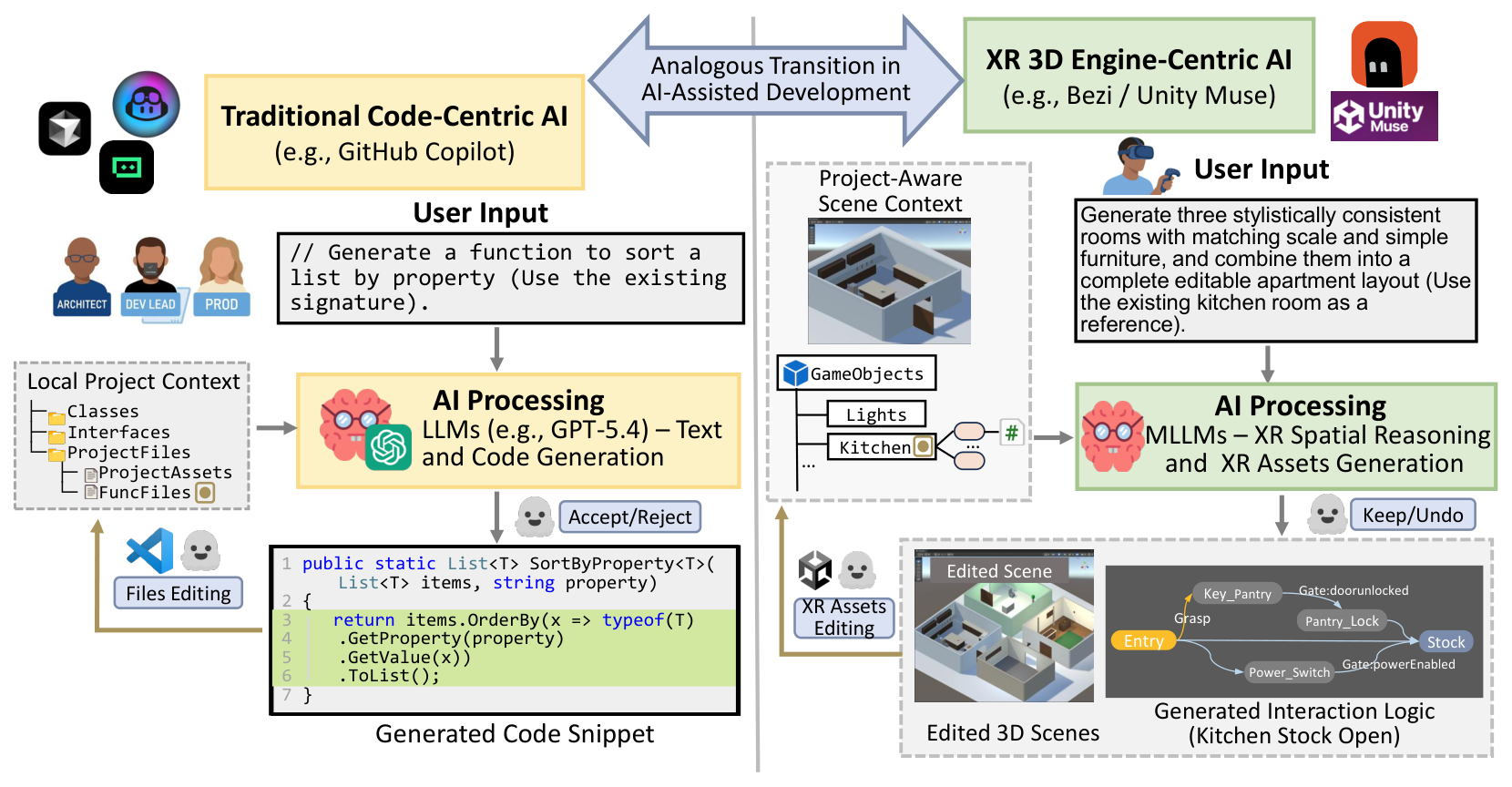
This systematic survey reviews software engineering practices for Virtual Reality (VR) and Augmented Reality (AR) across seven stages of the software life cycle: requirement engineering and planning, software design, software development, software testing, software deployment, software maintenance and updates, and software evaluation and feedback.
For each stage, we summarize research methods, datasets, evaluation metrics, and empirical findings, and compare VR/AR engineering with conventional mobile and desktop software development. We identify open challenges and future research directions for the VR/AR software ecosystem.
Recommended citation: Hanyang Guo, Jingwen Wu, Zhengyang Zhu, Gengyang Xu, Hong-Ning Dai, Xiapu Luo, Zibin Zheng. "Software Engineering Practice in the Virtual Reality/Augmented Reality Software Life Cycle: A Systematic Survey." arXiv preprint arXiv:2611.18567, 2026.
PDF | arXiv